Let’s be real — new smartphones are crazy expensive these days. A refurbished phone can save you a ton of money, but if you’ve never bought one before, it can also feel… a little scary. How do you know it’s not broken? Will the battery die in a month? Where should you even start looking?
If that sounds familiar, don’t worry — you’re not alone. Most guides dive straight into grades, specs, and complicated comparisons. That’s helpful if you’re already a phone expert… but if you’re just trying to figure out where to start, it’s a bit overwhelming.
This guide is different. We’ll break it down step by step, keep things simple, and focus on what actually matters. By the time you’re done reading, you’ll know exactly how to choose a refurbished phone that fits your budget, your needs, and your peace of mind — without overthinking it.
Step 1: Decide if a Refurbished Phone Is Right for You
Buying a refurbished phone isn’t just about saving money — it’s about making sure the phone fits you and your lifestyle. Before you even start browsing listings, it helps to ask yourself a few simple questions:
What’s my budget?
Refurbished phones can save hundreds, but prices vary depending on brand, model, and condition. Knowing your max spend first keeps you focused.
Am I okay with minor scratches or cosmetic wear?
Some refurbished phones may have tiny scratches or marks. If you’re okay with a few cosmetic flaws, you’ll save more money. If looks matter more, you might lean toward Grade A / “Like New” phones.
Do I want a phone outright or on a contract?
Refurbished phones can be bought unlocked and paired with cheap SIM-only plans, which is perfect if you like flexibility. But if you prefer a contract with bundled data, some carriers also sell refurbished phones on plan.
How long do I want this phone to last?
Think about whether you want a phone that lasts a year, two, or longer. This will guide which models and grades make sense.
Quick tip: If you answered “yes” to most of these questions, a refurbished phone could be a smart choice. If you’re unsure, it might help to keep reading — the next steps will make it much easier to decide.
Decide if a Refurbished Phone Is Right for You

Step 2: Decide What “Good Enough” Means for You
Once you know refurbished is a possibility, it’s time to figure out what “good enough” looks like. Not every refurbished phone is the same, and understanding the grading system will save you from overthinking.
Refurbished Phone Grades (Simplified)
Grade A / Pristine / Like New
Minimal to no wear, looks almost brand-new. Usually costs the most but offers peace of mind if you care about appearance.
Grade B / Very Good
Light scratches or minor signs of use, but fully functional. A great balance between savings and quality.
Grade C / Good
Noticeable wear and tear, like scratches on the screen or body. Still fully working, but usually the cheapest option.
Battery Health Matters More Than Scratches
Many first-time buyers stress over tiny scratches. The reality? The battery and warranty matter way more. Look for phones with battery health above 80%, and check if the seller offers a warranty — that’s your real safety net.
Decide Your “Good Enough” Rule
Think of it like this:
“I want it to look perfect” → Grade A
“I care about performance, not looks” → Grade B
“I want the cheapest option that still works” → Grade C
Pro tip: You can usually cover cosmetic scratches with a case — so don’t overpay just for looks.
Where to Look Safely

Step 3: Where to Look Safely
Now that you know what you want, it’s time to find a phone you can actually trust. Not all refurbished phones are created equal, and knowing where to look is key to avoiding headaches.
1. Manufacturer-Certified Stores
Apple, Samsung, Google and other big brands sell certified refurbished phones.
Pros: New batteries, rigorous testing, often come with a warranty and free delivery.
Cons: Usually slightly more expensive than third-party sellers.
2. Trusted Online Retailers
Examples: Amazon Renewed, MusicMagpie, Reboxed, or specialized refurb sellers.
Pros: Often cheaper than manufacturer-certified stores, sometimes with 12-month warranties.
Tips: Check reviews, return policies, and the seller’s track record before buying.
3. Carrier Programs
Some networks (like O2 or Giffgaff) sell refurbished phones on contract or as unlocked devices.
Pros: Can include next-day delivery or extended warranty plans.
Cons: Often more limited selection; may cost more than buying outright from a retailer.
4. What to Avoid
Peer-to-peer marketplaces like Facebook Marketplace or local “for sale” ads for first-time buyers.
Why: Harder to verify condition, warranty, or battery health — risk of scams is higher.
Quick Tip: For your first refurbished phone, stick with manufacturer-certified or well-reviewed retailers. Peace of mind is worth a little extra.
Step 4: What Really Matters When Choosing a Refurbished Phone
It’s easy to get lost in grades, specs, and prices. Here’s what you really need to focus on:
1. Warranty & Return Policy
Most reliable refurb phones come with 12- 24 month warranties.
Always check what’s covered (hardware issues, battery replacement, etc.).
Return policies matter — 14 days is standard; some sellers offer more.
Rule of thumb: If a seller doesn’t clearly offer warranty/returns, skip it.
2. Battery Health
Battery health is more important than scratches.
Look for phones with 80% or higher battery capacity.
Some sellers replace batteries in Grade B/C phones — double-check the listing.
3. Software Support & Future-Proofing (2026 Update)
Don't let the "age" of a phone fool you. In the past, a three-year-old phone was nearing the end of its life. Today, thanks to new manufacturer commitments, refurbished hardware lasts much longer.
Apple iPhones: Generally receive 6–8 years of security updates. An iPhone 13 or 14 bought today will still be relevant and secure for years to come.
Samsung & Google Pixel: Starting with models released in 2024 (like the S24 and Pixel 8), these brands now promise 7 years of full updates. This is a game-changer for the refurbished market—it means a "used" phone can now outlast a brand-new budget phone.
The 5G Rule: By 2026, 5G is the standard. To ensure your phone doesn't feel "slow" on the network, aim for an iPhone 12 or Galaxy S21 (or newer).
The "Sweet Spot" Strategy: Look for a model that is 2–3 years old. You’ll usually find the biggest price drop (40–60% off original retail) while still having 4+ years of guaranteed software life ahead of you.
4. Unlock Status & Network Compatibility
Make sure your phone works with your carrier:
Unlocked phones = works anywhere
Network-locked phones = check before buying
Pro Tip: Focus on warranty, battery, and compatibility — other details like scratches or slightly older models matter much less.
Step 5: Common Beginner Mistakes to Avoid
Even experienced buyers make mistakes when shopping for refurbished phones. Avoiding these common pitfalls will save you time, money, and frustration:
Mistake #1: Chasing the Absolute Cheapest Price
A super-low price can be tempting, but it might come at the cost of warranty, battery health, or overall reliability.
Rule of thumb: If a deal feels “too good to be true,” it probably is. Stick with trusted sellers.
Mistake #2: Ignoring Warranty or Return Policies
Don’t buy without checking what’s covered.
A solid warranty protects you if the phone has hidden issues or fails early.
Mistake #3: Overthinking Specs & Grades
You don’t need the latest model or Grade A perfection.
Focus on good enough for your usage and budget. Cosmetic scratches are usually irrelevant — a phone case fixes most issues.
Mistake #4: Forgetting Battery Health or Network Compatibility
Battery life matters far more than scratches or tiny dings.
Make sure the phone works with your carrier or is unlocked for flexibility.
Quick tip: Keeping these mistakes in mind will prevent buyer’s remorse and make your first refurb experience smooth and stress-free.
Step 6: Quick Decision Shortcuts
Sometimes it helps to have simple rules to make the buying process easier. Think of these as your “refurbished phone cheat sheet”:
Shortcut #1: Grade + Warranty = Peace of Mind
Grade B + 12-month warranty → safe and reliable choice
Grade A + 12-month warranty → premium option, less worry about scratches
Grade C → biggest savings, but only if you don’t mind cosmetic wear
Shortcut #2: Price Difference Check
If the price difference between refurbished and new is less than 10%, buying new may be worth it.
Shortcut #3: Battery Info is Non-Negotiable
Skip any listing that doesn’t mention battery health.
Aim for 80% or higher.
Shortcut #4: Stick to Trusted Sources
Manufacturer-certified stores, well-known refurb sellers, or major online marketplaces are the safest bet.
Avoid peer-to-peer or unverified sellers for your first purchase.
Shortcut #5: Cosmetic Flaws Are Easy to Fix
Minor scratches or scuffs? No problem. A phone case or screen protector will solve most issues.
Pro tip: Following these shortcuts keeps the process simple — you’ll spend less time stressing and more time enjoying your phone.
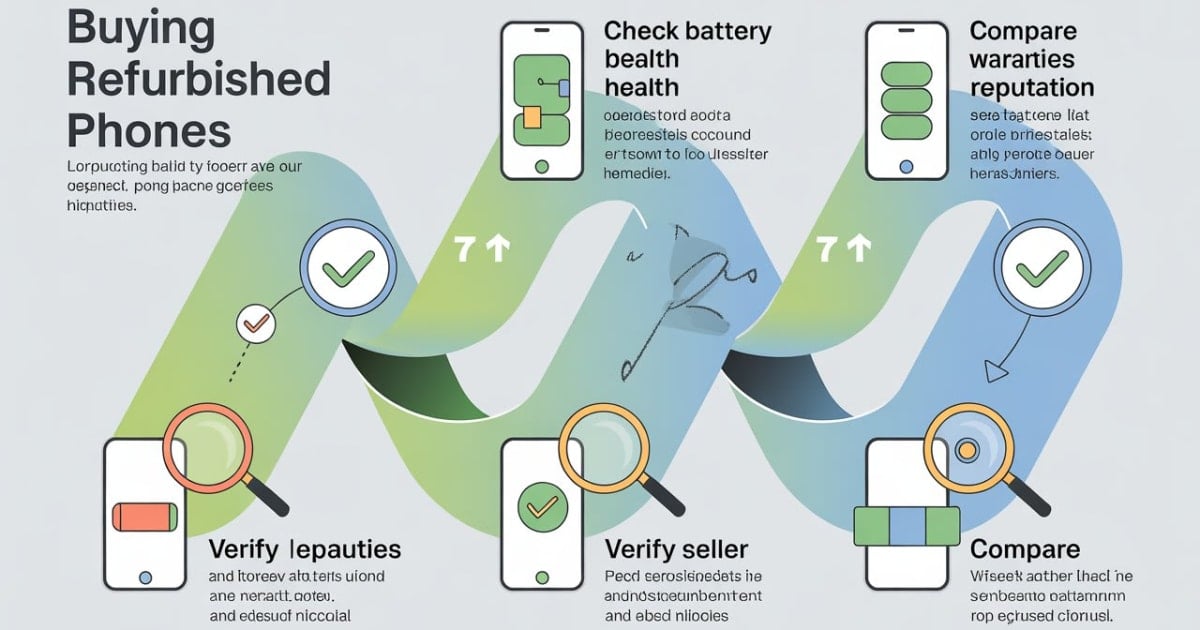
Step 7: Step-by-Step Buying Checklist
By now, you know what matters and where to look. Here’s a simple checklist to make your first refurbished phone purchase stress-free:
Set your budget – Know the maximum you’re willing to spend.
Decide your grade – Grade A, B, or C, depending on your tolerance for scratches and price.
Choose a reliable retailer – Stick to manufacturer-certified stores or well-reviewed refurb sellers.
Check warranty & return policy – Ensure at least 12 months of coverage and 14-day returns.
Confirm battery health & network compatibility – Aim for 80%+ battery; make sure it works with your SIM or is unlocked.
Read reviews – Both the seller and the specific phone model if possible.
Make your purchase with confidence – Follow the checklist and trust your decision.
Pro tip: Keep this checklist handy as you browse — it’s a simple way to avoid overthinking and make a smart buy.
Bonus – Buy Smart & Eco-Friendly

Step 8: Optional Bonus – Buy Smart & Eco-Friendly
Buying refurbished isn’t just good for your wallet — it’s also better for the planet.
Reduces electronic waste by keeping devices in circulation.
Conserves resources needed to produce brand-new phones.
Supports a more sustainable tech ecosystem.
Even a small decision like this can make a big difference while still giving you a high-quality phone. So, you save money and do something good for the environment — a win-win!
Conclusion & Reassurance
Buying your first refurbished phone doesn’t have to be stressful. By following these steps — deciding if refurbished is right for you, understanding grades, choosing trusted sellers, checking battery and warranty, and avoiding common mistakes — you can shop with confidence.
Remember:
Battery and warranty matter more than scratches
Start with trusted retailers
Use the checklist to stay focused
A refurbished phone can be a smart, affordable, and eco-friendly choice. Take your time, follow this guide, and you’ll end up with a phone that works perfectly for your needs — without breaking the bank or the excitement of your first purchase.