In recent years, the market for Apple refurbished products has rapidly transformed from a niche segment into a major force in the global consumer electronics landscape. What once was a fringe option for budget buyers is now mainstream, embraced by cost‑conscious consumers, eco‑aware shoppers, and Apple enthusiasts alike. From refurbished iPhones and iPads to MacBooks and Apple Watches, the demand for second‑life Apple devices is evolving — with the UK emerging as a particularly dynamic hub for this trend.
Today’s consumers are seeking value and sustainability in equal measure. Whether driven by the rising cost of new gadgets or a desire to reduce electronic waste, refurbished Apple products are capturing attention and spending across markets. In this article, we’ll explore the global trends shaping Apple refurbishment, break down why refurbished devices are surging in popularity, and provide insights tailored to UK buyers looking to make informed decisions in 2026.
What Does “Apple Product Refurbishment” Really Mean?
Apple product refurbishment isn’t just about reselling used items. It’s a rigorous, multi‑step process where pre‑owned devices are restored to excellent working condition through careful testing, repair, and quality assurance. When you buy a certified refurbished Apple product, especially through Apple’s official channels or trusted third‑party resellers, the device typically undergoes battery replacement, cosmetic repair, and functionality testing to ensure it performs like new.
In the UK, consumers can find official refurbished devices directly from the Apple UK Certified Refurbished Store, which offers products backed by a full Apple warranty and UK‑compatible specifications. Third‑party platforms like Back Market, musicMagpie, eBay, and Amazon also serve the UK market, expanding access to refurbished iPhones, iPads, MacBooks, and more with varying degrees of warranty and quality assurance.
The distinction between “as‑is” used devices and truly certified refurbished products matters. Certified refurbished items go through an established refurbishment process, resulting in devices that are generally more reliable and come with clear guarantees — something that increasingly influences buyer behaviour in the UK and worldwide.
Global Apple Refurbishment Market Trends: The Big Picture
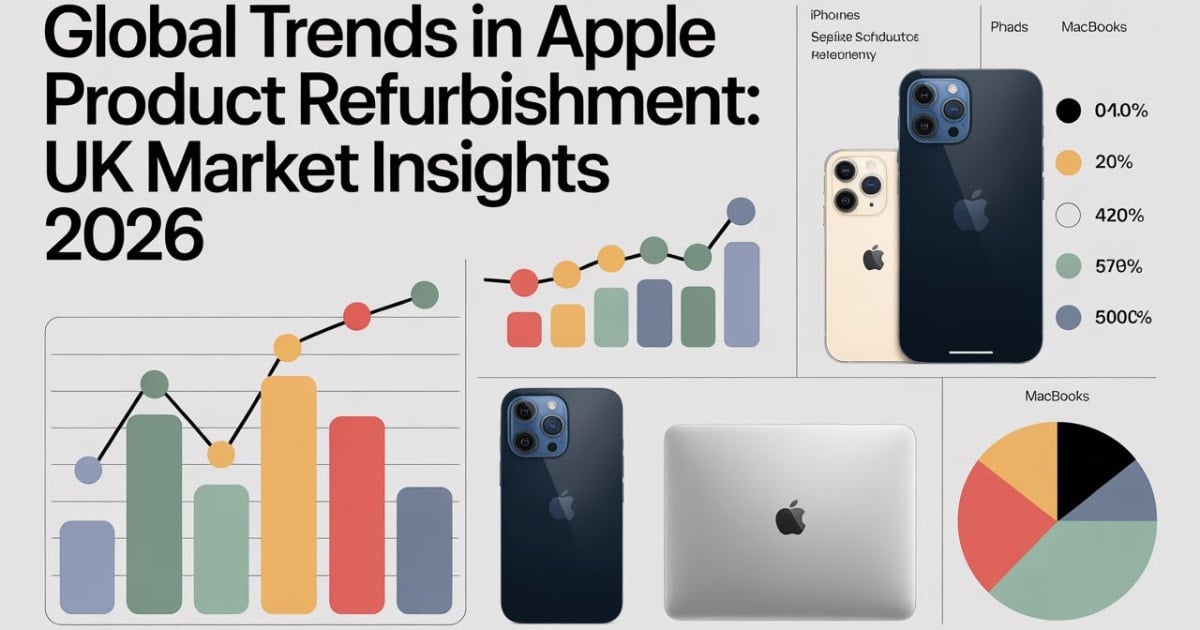
According to Counterpoint Research’s Secondary Smartphone Market Report, global refurbished smartphone sales grew around 5 % year‑on‑year in 2024, even as the broader new smartphone market rebounded from a difficult period. Remarkably, Apple strengthened its leadership in this segment, capturing roughly 56 % of global refurbished smartphone sales in 202, up from 51 % in 2023.
This growth reflects a broader shift in consumer priorities. As device prices rise, many customers are choosing refurbished alternatives not only for affordability but also for quality and sustainability. Apple’s robust ecosystem, long‑term software support, and strong residual value contribute significantly to this trend.
Another notable global pattern is the rising share of 5G devices in the refurbished market. In 2024, around 42 % of all refurbished smartphones sold were 5G‑capable models, up substantially from previous years. This suggests that consumers are not just settling for old tech — they are looking for refurbished devices that offer modern performance and connectivity.
A key constraint, however, is supply. Many consumers are holding on to their devices longer due to improved hardware durability and softer upgrade incentives. This has created a supply crunch for certain newer models entering the refurbishment pipeline, which in turn influences average selling prices and availability dynamics.
The UK’s Unique Position in the Refurbished Market
In the UK, the refurbished devices segment shows signs of maturity and deepening consumer trust. Recent surveys indicate that refurbished devices accounted for about 15.4 % of total smartphone purchases in the UK in 2025, a slight adjustment from 15.8 % the previous year.
Though this percentage might appear modest, it reflects a stable and enduring segment rather than decline — a sign of market consolidation and quality‑driven consumer choice. Notably, nearly two‑thirds of UK buyers who chose refurbished smartphones opted for devices in pristine or certified refurbished condition, indicating that quality expectations are increasingly shaping purchase decisions.
Apple’s influence in the UK is particularly strong. While Apple’s overall market share among all smartphones in the UK stands at about 43 %, its share within the refurbished segment is markedly higher — roughly 56.5 %. In other words, more than half of all refurbished phones purchased in the UK are Apple devices. This dominance underscores not just brand loyalty, but also consumer confidence in Apple’s long‑term performance and ecosystem value.
Which Apple Products Are Leading the Refurbished Wave?
The refurbished market isn’t limited to phones. Across product lines, several Apple devices are attracting strong demand:
Refurbished iPhones: These remain the most sought‑after category globally and in the UK. Older models such as the iPhone 11, 12, 13, and 14 series frequently top sales charts due to their performance, continued software support, and affordability compared to new releases.
Refurbished iPads: Tablets have become popular in education and home productivity, with refurbished iPad Air and Pro models offering strong alternatives for budget‑minded professionals and students.
Refurbished MacBooks: Air and Pro models, especially versions with Apple’s M‑series chips, provide exceptional performance at a fraction of the price of new units, making them a valuable choice for creatives and remote workers.
Refurbished Apple Watches: Although smaller in volume, refurbished wearables are gaining traction among fitness enthusiasts and Apple users seeking cost‑efficient upgrades.
In the UK, deals on refurbished iPhones are already hitting headlines — for example, a refurbished iPhone 13 with generous data plans is being offered at around £19.99 per month, highlighting how attractive refurbished pricing can be. Meanwhile, refurbished MacBooks and iPads regularly crop up on Apple UK’s own certified store with significant savings over new models.
Why Consumers Are Choosing Refurbished Apple Devices
Understanding why buyers are shifting towards refurbished Apple products helps explain why this trend is not going away anytime soon.
Affordability without major compromise is arguably the biggest motivator. The price differential between new and refurbished devices can represent hundreds of pounds, making high‑performance Apple products more accessible. When high‑end features, bolster‑performance chips, and premium design are available at lower cost, the value proposition becomes compelling.
Sustainability and environmental consciousness play a growing role. Refurbishment extends a device’s lifecycle, reducing electronic waste and conserving valuable materials like rare earth metals. In the UK, where environmental policies and consumer awareness are high, refurbished tech fits neatly into broader discussions about sustainable consumption and carbon footprint reduction.
Importantly, quality assurance has improved significantly. Whereas early refurbished devices carried a reputation for inconsistency, today’s certified refurbished products undergo rigorous checks and often come with warranty protections. This shift is changing perceptions — refurbished doesn’t mean second‑class; it increasingly means smart and safe.
UK data underscores this sentiment: a large segment of refurbished buyers chooses devices in excellent condition, prioritising reliability over lowest possible cost.
Challenges in the Refurbishment Landscape
Despite strong growth and brand dominance, the market faces obstacles. One recurring challenge is supply constraints. As consumers hold onto devices longer due to higher durability and longer software support, fewer used devices flow into refurbishment pipelines. This especially affects the availability of later models and can influence average selling prices.
Another factor is the rise of “as‑is” device sales, where used devices are sold with minimal technical refurbishment. While this creates lower‑priced options, it can also confuse buyers and dilute overall quality expectations if not properly communicated by sellers.
From a UK perspective, the refurbished segment must also contend with varied retailer standards. While Apple’s own certified programme provides confidence, third‑party resellers operate with different warranties and quality checks, making it imperative for buyers to choose trusted sources.
Practical Tips for UK Buyers Considering Refurbished Apple Products
For UK consumers looking to invest in refurbished Apple devices, here are some practical considerations to ensure quality and satisfaction:
Seek certified products: Devices refurbished through Apple’s own certified programme or recognised refurbishers (Back Market, musicMagpie) generally offer the best blend of reliability and warranty protection.
Check condition grades: Understand the condition descriptions like “excellent,” “very good,” or “fair,” and how they impact pricing and performance expectations.
Compare warranties: Apple offers a full warranty on certified refurbished units, while third‑party sellers may offer limited coverage — always read the fine print.
Evaluate total cost of ownership: Consider accessories, warranties, and potential repair costs when comparing options.
Watch for local deals: Retailers occasionally run promotions on refurbished Apple products in the UK, offering even greater value.
What’s Next for Apple Refurbishment in 2026 and Beyond?
Looking ahead, several trends are likely to shape the Apple refurbishment market into 2026 and beyond. As device lifecycles continue to lengthen, the secondary market’s growth may become more about value capture than volume growth. With more consumers holding devices longer before upgrading, the emphasis will shift toward quality, repairability, and lifecycle extension services.
The rise of online marketplaces and diversified retail channels will also reshape how refurbished devices are sold and delivered, providing greater choice and convenience for UK buyers. Meanwhile, environmental concerns and government policy discussions — such as proposals to adjust VAT on refurbished electronics — may further influence consumer uptake and industry dynamics.
In this evolving landscape, Apple’s robust brand reputation, long software support cycles, and resilient residual values position refurbished Apple products to remain a central part of the global secondary tech ecosystem.
Conclusion
The trend toward Apple product refurbishment is a story of value, sustainability, and changing consumer expectations. From iPhones to MacBooks, refurbished Apple devices are no longer perceived as budget compromise; they represent intelligent choices that align with financial prudence and environmental responsibility.
In the UK, the market shows stability and maturity, with strong demand for certified, high‑quality refurbished products and a dominant share captured by Apple within the secondary segment. Whether you’re a tech enthusiast, budget‑conscious buyer, or eco‑friendly consumer, understanding the dynamics of the refurbished market empowers you to make smarter purchases in 2026 and beyond.
Explore the world of certified refurbished Apple products in the UK today and experience premium technology at remarkable value.