Let's get the awkward bit out of the way first.
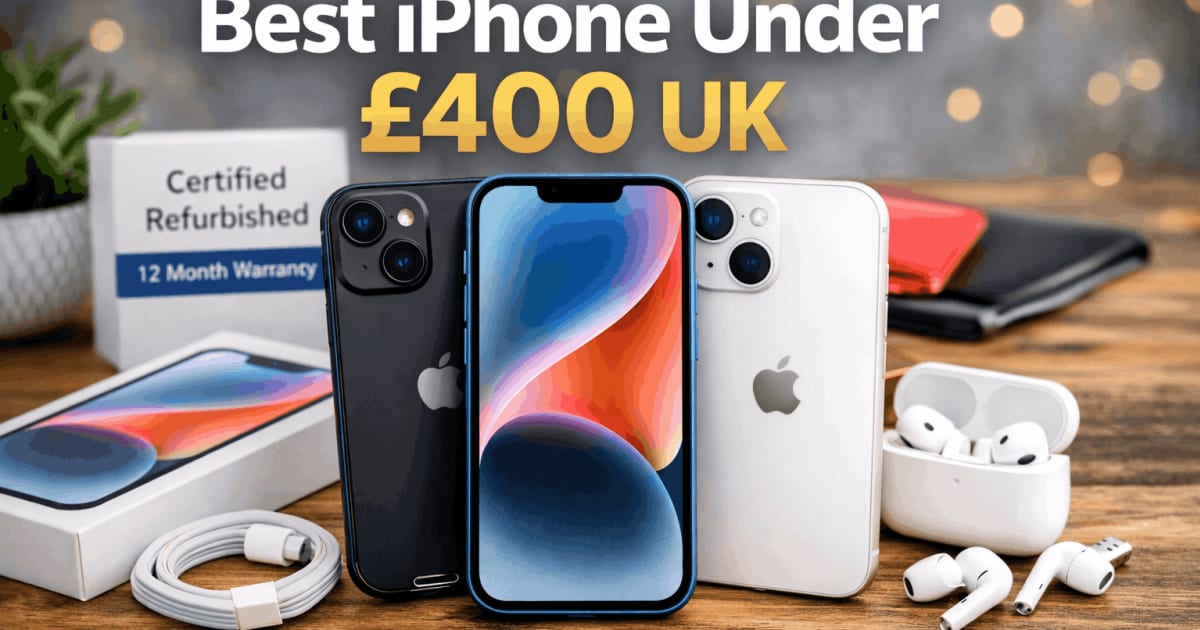
If you walk into an Apple Store today with £400 in your pocket, you are walking out with a case and a pair of AirPods. The cheapest iPhone Apple currently sells, the 17e, launched in March 2026 at £599 SIM-free. Every other model in the lineup goes up from there.
So does that mean £400 isn't enough for a good iPhone in 2026?
Not even close. It just means you're shopping in the right place — the refurbished market — where the same £400 buys you an iPhone that's fast, well-supported, and honestly hard to tell apart from a brand-new one. Here's exactly what to look for.
Why refurbished is the whole answer here
There's still a lingering idea that "refurbished" means "someone else's problem, resold." That hasn't been true for years, and UK buyers have caught on: around a quarter of people who bought a phone in 2023 bought refurbished, up from roughly one in five two years earlier.
The reason is simple. A properly refurbished iPhone from a reputable UK seller has been tested, wiped, graded, and comes with a warranty — commonly 12 months. You're not buying a mystery box off a marketplace. You're buying a phone that someone has checked and is prepared to stand behind, for 30–50% less than the new price.
That discount is what turns £400 from a disappointing budget into a genuinely good one.
The sweet spot: refurbished iPhone 14 (from around £220–£290)
If you want one recommendation and no faff, this is it.
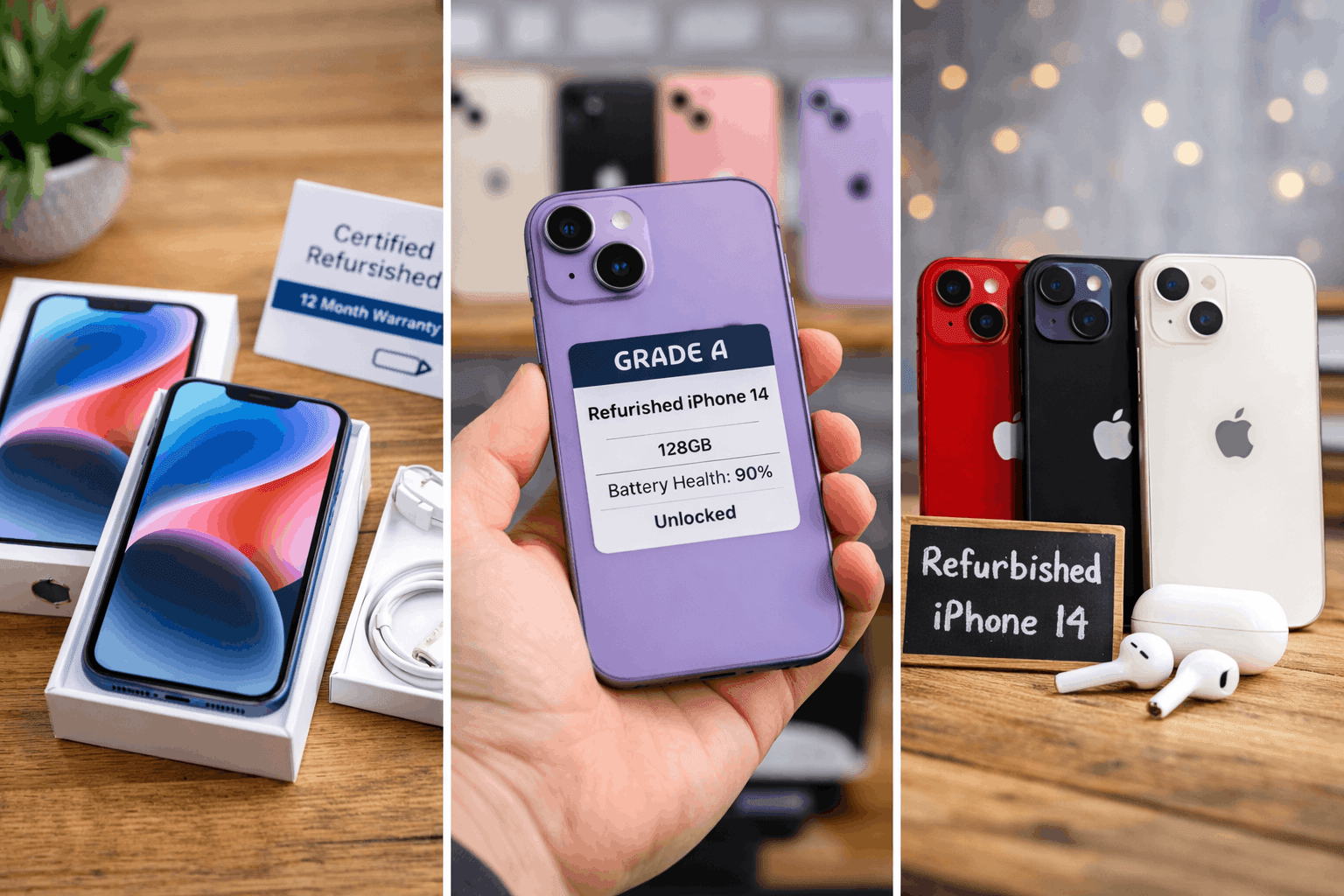
The iPhone 14 currently starts at around £219 on marketplaces like Back Market, with a Grade A 128GB unit typically landing between £250 and £290. It runs the A15 Bionic chip — the same silicon Apple put in the iPhone 13 Pro — so it doesn't feel slow. It has a 6.1-inch OLED display, a dual-camera system with Apple's Photonic Engine for better low-light shots, and Crash Detection built in.
The real appeal is what you do with the change. Buy the 14 at £280 instead of stretching to a £400 model, and you've got £120 left for a better grade, more storage, a decent case, and a charger that isn't a fire hazard. That's a better phone experience than spending every last pound on the handset and making do.
The catch: it's Lightning, not USB-C. If everything else you own charges by USB-C, that's one more cable to lose.
The stretch pick: refurbished iPhone 15 (right at your ceiling)
If USB-C matters to you, the iPhone 15 is the model to want — and in 2026 it just about fits.
Refurbished iPhone 15s start from around £342, with Grade A 128GB units generally sitting in the £380–£440 range. So the bottom half of that range is inside budget, and the top half isn't. You'll need to shop carefully.
For your money you get USB-C, the Dynamic Island, a 48MP main camera that holds up far better when you crop and zoom, and an extra year of software support at the back end of the phone's life. For casual snaps you won't notice the camera gap. If you actually care about photos, you will.
Worth knowing: Apple's own certified refurbished iPhone 15 sits at £589 — well outside £400. Getting a 15 under budget means going to a specialist refurbisher, which makes checking the grading and battery terms non-negotiable.
The safe budget pick: iPhone 13 (around £399)
The iPhone 13 still shows up around the £399 mark at UK retailers with 128GB of storage, and it remains a perfectly pleasant phone: smooth performance, all-day battery, that same clean iOS experience.
Here's the honest take, though. At £399 for a 13, versus £280 for a 14, the maths gets hard to defend. Unless you find an unusually good 13 deal, the 14 is the better buy at a lower price. Consider the 13 a fallback if 14 stock in your preferred grade dries up — which, with refurbished phones, happens constantly.
Buy the listing, not the model name
This is the part most guides skip, and it's the part that decides whether you're happy in six months.
Two iPhone 14s at the same price can be very different phones. Before you click buy, check:
Battery health. Look for a stated minimum figure. "Tested" is not the same as "85% or above" and definitely not the same as "new battery."
The grade. "Excellent" at one retailer can mean "Good" at another. Read the seller's own definition, not the word itself.
The warranty. It should be stated plainly. If you're hunting through fine print to find the length, that's your answer.
The returns window. The first week is when the real problems surface — weak battery endurance, a dodgy charging port. You want room to send it back.
Unlocked. Buy SIM-free. It keeps setup simple and keeps you free to move networks.
Don't forget the other half of the bill
A £280 iPhone on a bad tariff costs more over two years than a £400 iPhone on a good one.
Pair your handset with a cheap SIM-only deal — providers like Smarty and giffgaff regularly start around £10 a month — and you've got a modern iPhone, no contract lock-in, and a total spend that a new-phone contract can't come near.
So, what should you buy?
For most people: a refurbished iPhone 14, 128GB, in the best grade you can get for around £280. It's quick, the camera's good, it'll be supported for years, and it leaves budget spare.
If USB-C and the camera genuinely matter: hunt for an iPhone 15 in the low £380s. It's the better phone. You'll just have to work harder to find one inside budget.
Whatever you pick: buy from a seller who tells you the battery health, the grade, and the warranty up front. That single habit matters more than which model name is on the box.